
2026 Consumer Outlook - America’s Biggest Financial Concerns in 2026
- Date published: August 27, 2026
-

Written by
-

Reviewed by
Table of Contents
- Introduction
- The 2026 concern index
- #5 27% Healthcare costs
- #4 27% Housing costs
- #3 34% Utility bills
- #2 36% Unexpected expenses
- #1 53% Rising living costs
- Two kinds of pressure, one household budget
- Why the concern ranking matters
- A practical response plan
- When short-term credit is part of the comparison
- What America’s concerns reveal
- Methodology note
- Contact Cashback Loans
Introduction
A ranked look at the costs creating the most pressure - and what the results reveal about household financial resilience.
Financial concern in 2026 is not centered on one bill. It is built from the interaction between everyday costs and expenses that arrive without warning. A Cashback Loans survey of 3,000 Americans found that rising living costs were the leading concern, selected by 53% of respondents. Unexpected expenses followed at 36%, utility bills at 34%, and housing and healthcare costs at 27% each.
Because respondents could identify more than one concern, the results are not competing shares of a single total. Instead, they show the pressure points that can overlap inside the same household. A family may be managing higher grocery costs, a utility increase, rent or mortgage payments, and a medical expense at the same time. That overlap is what makes the ranking especially useful: it maps both the predictable strain of monthly bills and the uncertainty of a financial surprise.
The 2026 concern index
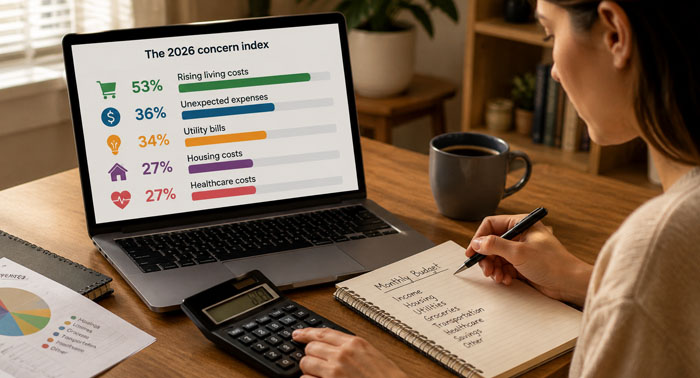
The 26-point gap between rising living costs and the next concern is striking. It suggests that Americans are thinking beyond any single category. "Living costs" can capture the cumulative effect of food, transportation, household supplies, insurance, childcare, and other necessities. The remaining four concerns show where that broad pressure becomes most concrete.
#5 27% Healthcare costs
Healthcare costs share fourth place in the ranking. A medical concern can create several expenses at once: a copay or deductible, medication, transportation, childcare during an appointment, and time away from work. Even when an event is not an emergency, uncertainty about the final bill can make it difficult to plan.
Households can ask providers for cost estimates, confirm network status, request itemized bills, and explore payment plans or assistance programs when available. Urgent symptoms should be evaluated by a qualified medical professional. Financial planning can help organize the cost, but it should not be used to decide whether urgent care is medically necessary.
#4 27% Housing costs
Housing also concerns 27% of respondents. Rent or mortgage payments are typically the largest fixed expense in a household budget, and related costs extend beyond the monthly payment. Insurance, property taxes, maintenance, association fees, parking, and moving expenses can all affect affordability.
Housing pressure is difficult to solve through small cuts alone. Canceling a subscription may help at the margin, but it rarely offsets a major rent increase or repair. Earlier action may create more options: speaking with a landlord or mortgage servicer, reviewing assistance programs, comparing insurance, planning for renewals, or building known annual costs into monthly savings targets.
#3 34% Utility bills
Utility bills rank third at 34%. Electricity, gas, water, sewer, trash, phone service, and internet combine into a substantial household category. These bills can also fluctuate with weather, household size, rate changes, and usage, making a "normal" month hard to define.
A practical review separates usage from fixed charges. Consumers can compare bills across the same season, check for billing errors, ask about budget billing, and review eligibility for energy or utility assistance. Efficiency changes may help, but households should also plan around seasonal peaks so a predictable summer or winter increase does not feel like an unexpected event.
#2 36% Unexpected expenses
Unexpected expenses are the second-largest concern, selected by 36%. A tire replacement, urgent trip, appliance failure, school expense, or medical bill can disrupt a budget that was working only days earlier. The expense does not have to be enormous to create pressure; timing matters when it arrives before payday or alongside other bills.
Resilience begins by defining what "unexpected" means for the household. Some costs are irregular but foreseeable: vehicle registration, annual premiums, school supplies, or routine maintenance. Setting aside a small amount each month can turn those bills into planned expenses. A separate emergency cushion can then be reserved for events that are truly difficult to anticipate.
#1 53% Rising living costs
At 53%, rising living costs stand apart as Americans' biggest financial concern in 2026. The category is broad because the experience is broad. When groceries, transportation, household goods, services, and insurance all require more of the budget, consumers may change brands, postpone purchases, reduce quantities, use savings, or search for additional income.
The concern is not merely that one item costs more. It is that several increases can compress the financial margin between income and required expenses. That smaller margin makes households more sensitive to the other ranked concerns. A utility spike or medical bill is harder to absorb when everyday spending has already used most of the available cash.
Two kinds of pressure, one household budget
The ranking becomes clearer when the concerns are grouped into two layers. Living costs, utilities, and housing are recurring pressures: they return every month and require sustainable planning. Unexpected and healthcare expenses are shock pressures: their size and timing may be uncertain, even when the category itself is familiar. Healthcare can also behave as both, particularly for households managing ongoing treatment or prescriptions.
| Pressure type | What it includes | Most useful first response |
|---|---|---|
| Recurring | Living costs, utilities, housing | Review the monthly gap; adjust recurring costs or income. |
| Shock or variable | Unexpected expenses, healthcare | Use a buffer, estimate the bill, and compare payment options. |
Why the concern ranking matters

Other findings from the same survey help explain why these five concerns feel so immediate. Sixty-nine percent of respondents said achieving financial security is harder than it was five years ago. Forty-four percent reported having no emergency savings, while 37% said they had borrowed money for essential living costs during the previous year. In addition, 42% had cut back on groceries and 25% had used savings for everyday expenses. Each figure uses its applicable survey base and describes a different question, so the percentages should not be combined. Together, however, they show how concern can translate into day-to-day adjustments.
The pattern also distinguishes confidence from capacity. A person may feel generally stable while lacking enough readily available cash for a repair, or may have savings but still worry about housing and healthcare costs that could exceed the available balance. That is why a useful financial plan does more than track monthly spending. It identifies the bills that must be paid, the costs that change seasonally, the expenses that could be negotiated, and the amount of cash available if income and due dates do not line up.
A practical response plan

- Start with a seven-day cash view. List income and every bill due before the next paycheck. This reveals whether the immediate problem is timing or a continuing shortfall.
- Protect essential services. Prioritize housing, utilities, food, transportation, insurance, and necessary medical needs before flexible spending.
- Contact billers early. Ask about due-date changes, payment arrangements, level billing, hardship programs, or an itemized estimate before a payment is missed.
- Build two savings categories. Use sinking funds for irregular but expected costs and a separate emergency fund for less predictable events.
- Evaluate borrowing against the next budget. Review the amount received, total repayment, fees, due date, funding timing, and the effect of repayment on essential bills.
When short-term credit is part of the comparison
When a necessary expense arrives before income is available, some consumers may consider a payday advance , a same day credit option , or another form of short-term borrowing. The key question is whether the need is a specific timing gap with a workable repayment plan. A recurring monthly deficit usually calls for a broader change to expenses, income, or bill arrangements.
Consumers researching direct lender loans can verify whether the lender manages the process itself and review published rates and terms . Before choosing, compare savings, payment plans, extensions, help from family, and options through a bank or credit union. Approval and funding timing can vary, and borrowers should select only an amount they can repay by the stated due date while still covering essential expenses.
What America's concerns reveal
The survey ranking captures a financial environment in which everyday affordability and emergency readiness cannot be separated. Rising living costs lead at 53%, but their significance is amplified by the concerns that follow: unexpected expenses at 36%, utility bills at 34%, and housing and healthcare costs at 27% each.
These results should not be read as a judgment about household discipline. Financial security depends on income, location, family responsibilities, health, job stability, debt, and many other circumstances. The findings instead show where Americans feel the greatest pressure - and why preserving even a small amount of flexibility can matter. A budget that plans for recurring increases, identifies irregular costs, and evaluates every payment option in context is better positioned to respond when two concerns arrive at once.
Methodology note
Source: Cashback Loans Results Tables. Base: 3,000 respondents. Percentages are rounded. Respondents could identify multiple financial concerns, so the figures should not be added together. Results describe reported attitudes and do not establish cause and effect. Subgroup bases may vary where applicable.
Contact Cashback Loans
Phone: (909) 483-0474
Email: [email protected]
Website: www.cashbackloans.com
Contact page: www.cashbackloans.com/contact