
Need to Apply for a Payday Loan in California?
- Date published: February 19, 2026
-

Written by
-

Reviewed by
Table of Contents
- Introduction
- Core Documents Lenders Usually Require for a California Payday Loan
- How an Active Checking Account Affects Your Payday Loan Application
- Contact Information You’ll Be Asked to Provide for a Payday Loan
- Step-by-Step: Applying for a Payday Loan in California
- Common Questions About Payday Loan Documentation in California
- How to Ensure Your Payday Loan Application Meets California Regulations
- Conclusion
Introduction
When applying for a payday loan in California, have the following information and documents ready to speed up the process:
- The last 4 digits of your Social Security Number (SSN).
- Your date of birth.
- A cell phone number that can receive verification codes.
- An email address.
- The loan amount you’re requesting (for example: $100, $200, $300, $400).
Depending on underwriting and your ability to repay, the lender may ask for additional documentation.
Core Documents Lenders Usually Require for a California Payday Loan
Most lenders ask for these basic items:
- Last 4 digits of your Social Security Number (SSN).
- Date of birth.
- Cell phone number.
- Email address.
Having these ready helps verification and can shorten your application time.
Acceptable Government-Issued Photo IDs for Payday Loan Applications
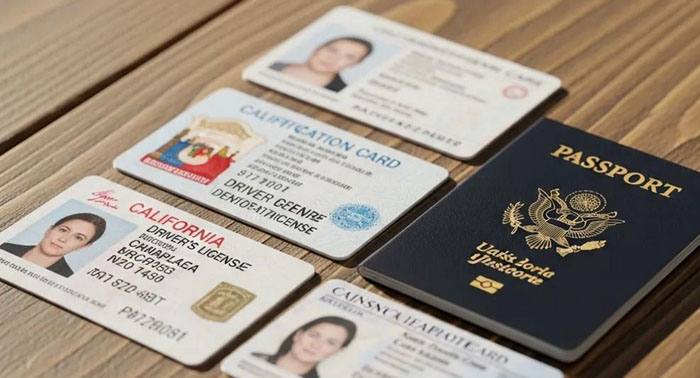
Common acceptable photo IDs include:
- California Driver's License: the most common form - confirms identity and residency.
- California Identification Card: a good alternative if you don’t drive.
- U.S. Passport: valid passports are also accepted as photo ID.
These IDs let lenders confirm who you are and meet state compliance requirements.
Proof of Income Needed for Payday Loan Approval

Typical proof of income includes:
- Pay stubs: recent stubs showing earnings.
- Bank statements: evidence of regular deposits.
- Tax returns: commonly requested for self-employed applicants.
Clear income documentation helps lenders assess your ability to repay.
In addition to income, lenders often request documents to verify your identity and mailing address.
Payday Loan Documents: Bank Statement, ID, Utility Bill
Applicants are commonly asked to provide a recent checking account statement, a valid government-issued ID, and a utility or phone bill to confirm their address.
Payday loan choices and consequences, N Bhutta, 2015
How an Active Checking Account Affects Your Payday Loan Application
An active checking account matters because lenders use it to confirm identity, deposit funds, and collect repayments. It also supports underwriting checks that influence approval decisions.
Why a Valid Bank Account Is Needed for Payday Loan Processing
Lenders rely on a verifiable bank account to send funds and withdraw repayment on the due date. Without one, your application could be delayed or declined.
Are Alternative Banking Methods Accepted for Payday Loans in California?
Some lenders accept alternatives like prepaid debit cards, but traditional checking accounts are preferred. Digital wallets are generally not used for disbursement or repayment in California. Confirm acceptable options with your lender before you apply.
Contact Information You’ll Be Asked to Provide for a Payday Loan
When applying, be prepared to provide the following contact details:
- Last 4 digits of your Social Security Number (SSN).
- Cell phone number.
- Date of birth.
- Email address.
Accurate contact information ensures you receive verification codes, disclosures, and updates about your application.
Why Phone and Email Are Essential for Loan Communication
Phone and email are used to deliver legal disclosures, billing statements, verification codes, and important notices about your loan. They also let lenders contact you quickly if action is needed to keep the loan in good standing.
How Accurate Contact Details Speed Up Your Application
Providing correct contact information helps identity checks finish faster and ensures you get time-sensitive codes and status updates without delay.
Step-by-Step: Applying for a Payday Loan in California
- Select Loan Amount: Choose the amount you need from the available options (for example: $100, $200, $300, $400).
- Provide Personal Information: Enter the last 4 digits of your SSN, your date of birth, cell phone number, and email address.
- Submit Application: Complete and send the application form.
- Verification: Enter the verification code sent to your registered cell phone to confirm your identity.
- Application Review: We review your submission and notify you by email if it’s accepted.
- Loan Agreement: If approved, you’ll review and accept the loan terms and conditions.
- Receive Funds: After confirmation, funds are disbursed to you.
Note: Approval depends on underwriting criteria and your ability to repay. Additional restrictions may apply.
How to Prepare Your Documents Before Applying
Before you apply, make sure you have:
- A valid email address.
- The last 4 digits of your Social Security Number (SSN).
- Your date of birth.
- Your cell phone number.
Double-check that all entries are accurate. Save or print important electronic communications for your records.
Key Steps to Complete an Online Payday Loan Application
- Select Loan Amount: Pick the amount you want ($100, $200, $300, or $400).
- Enter Personal Information: Provide last 4 SSN digits, date of birth, cell phone number, and email address.
- Submit Application: Click submit to send your details.
- Verification: Enter the verification code sent to your phone.
- Confirmation: You’ll get a notice that your application is under review and an email if it’s approved.
Common Questions About Payday Loan Documentation in California
Can You Get a Payday Loan Without a Bank Account in California?
It’s possible but limited. Most lenders prefer an active checking account for disbursement and repayment. Some may accept prepaid debit cards, but options vary - confirm with the lender before applying.
Do PaydayLoans in California Require a Credit Check?
Many payday loans in California don’t require a credit check, making them accessible to borrowers with poor credit. Lenders will still review income and repayment ability through other documentation.
How to Ensure Your Payday Loan Application Meets California Regulations
To comply with California requirements, make sure you:
- Confirm the lender is licensed by the California Department of Financial Protection and Innovation under the Deferred Deposit Transaction Law.
- Understand the maximum APR for a 14-day payday loan can be as high as 460%.
- Know that loan terms may range from 1 to 31 days.
- Meet underwriting criteria and demonstrate your ability to repay.
- Note lenders do not offer automatic renewals; loans must be paid in full before taking a new one.
What the California Department of Financial Protection and Innovation Does
The California Department of Financial Protection and Innovation oversees payday lenders to enforce rules that protect consumers and require clear disclosures.
How Cashback Loans Protects Compliance and Your Privacy
Cashback Loans operates under California rules and applies safeguards to keep your information confidential. We follow data protection practices and legal requirements to protect customer privacy.
Frequently Asked Questions
What are the eligibility requirements for a payday loan in California?
To qualify for a payday loan in California you must be at least 18, live in California, and have a steady source of income. Lenders usually ask for proof of income (pay stubs or bank statements) and a valid government-issued ID. An active checking account is often required to process the loan. Meeting these requirements helps demonstrate you can repay the loan.
How can you improve your chances of getting approved for a payday loan?
To improve approval odds, make sure all your documents are complete and accurate. Provide recent proof of income like pay stubs or bank statements, keep steady employment, and request a loan amount that fits your income. Even though many lenders don’t run credit checks, a stable financial profile helps your application.
What should you do if your payday loan application is denied?
If your application is denied, review the lender’s reason- common issues include insufficient income, lack of a bank account, or incomplete paperwork. Fix any problems, then consider reapplying or exploring other lending options or community assistance programs. It’s also a good time to reassess your budget to avoid future borrowing needs.
Are there alternatives to payday loans in California?
Yes. Alternatives include personal loans from credit unions or banks (often lower interest), borrowing from family or friends, and community assistance programs. Nonprofits may offer financial counseling to help you manage expenses without high-interest loans.
What are the consequences of defaulting on a payday loan?
Defaulting can lead to late fees, growing debt from interest, and possible collections or legal action. It may also hurt your credit score. California law bans rolling over payday loans, so you must pay the loan in full to avoid added penalties. Contact your lender if you’re struggling- there may be options to help.
How can you protect yourself from payday loan scams?
To avoid scams, verify the lender’s license with the California Department of Financial Protection and Innovation. Steer clear of lenders who pressure you for personal data or demand payment upfront. Check reviews and complaints, and be cautious of offers that seem too good to be true. When in doubt, choose a reputable lender.
What is the maximum loan amount you can apply for in California?
Payday loans in California typically range from $100 to $500, depending on the lender and your income. Many first-time borrowers are capped at $300. Check your lender’s limits and fees before applying to make sure the amount fits your ability to repay.
How long does it take to receive funds after applying for a payday loan?
Once approved, funds are usually available within one business day. Some lenders offer same-day funding if you apply early, but timing depends on the lender and your bank’s processing. Confirm expected timelines with your lender if you need money quickly.
Are there any fees associated with payday loans in California?
Yes. Fees include finance charges that can range roughly from $15 to $30 per $100 borrowed, which can produce an APR up to about 460% for short-term loans. Lenders may also charge late fees or bounced-check fees. Read the loan agreement carefully so you understand all costs.
What happens if you cannot repay your payday loan on time?
If you miss a payment, you may face late fees and higher overall costs. Lenders may pursue collections that can affect your credit. California law prohibits rolling over payday loans, so the loan must be paid in full to avoid extra penalties. Contact your lender right away if you have trouble making a payment- they may offer options or guidance.
Can you apply for multiple payday loans at once in California?
While it’s technically possible, it’s not recommended. California limits borrowers to one payday loan per lender at a time. Taking multiple loans increases financial strain and complicates repayment. Explore other options if you need additional funds.
What should you do if you feel you are being treated unfairly by a payday lender?
Start by trying to resolve the issue with the lender. If that doesn’t work, file a complaint with the California Department of Financial Protection and Innovation, which oversees payday lending. You may also consider legal advice if you believe your rights were violated.
Conclusion
Gathering the right documents before you apply for a payday loan in California makes the process smoother. With valid ID, proof of income, and accurate contact details, you’ll move through verification faster and improve your chance of approval. Review your options carefully and visit our website to learn more or to start your application.