
How to Cover Costs Fast Without Draining Savings
- Date published: June 30, 2026
-

Written by
-

Reviewed by
Table of Contents
- Introduction
- Common Unexpected Medical Costs
- The $400 problem
- Your Options to Pay a Medical Bill Fast
- When a Short-Term Loan Makes Sense for Medical Costs
- How to Apply for a Medical Expense Loan Today
- How to Dispute a Medical Bill Before You Pay It
- Frequently Asked Questions
- The Bottom Line
- Contact Cashback Loans
Introduction
A surprise medical bill hit your mailbox. The amount is more than you have on hand right now. Here’s what to do.
You are not alone in this situation - not by a long way. According to the Federal Reserve’s 2023 Report on the Economic Well-Being of U.S. Households, nearly 37% of American adults say they could not cover an unexpected $400 expense using cash or its equivalent. A medical bill is precisely the kind of expense that arrives without warning, often in amounts that exceed available cash, and that demands a response within a defined timeframe.
The good news: you have more options than most people realise, and some of them are faster and more accessible than you might expect. This guide covers the most common unexpected medical costs, every realistic option for covering them, when a short-term loan is the right tool, how to apply today, and - critically - how to dispute a bill that may not be accurate in the first place.
California residents who need funds today can apply through Cashback Loans in under five minutes, with no credit check and same-day funding available.
Note:
This article addresses financial options for covering medical costs. It does not provide medical advice. For medical guidance, consult a qualified healthcare provider.
Common Unexpected Medical Costs
Medical bills are not all the same. The amount, urgency, and negotiability vary significantly by type of care - which affects which financial option makes the most sense for each situation.
| Medical Situation | Typical Out-of-Pocket | With Insurance (Copay / Deductible) |
|---|---|---|
| Emergency room visit | $1,200–$2,500+ | Deductible applies; often $500–$1,500+ even with coverage |
| Urgent care visit | $150–$350 | Copay typically $50–$150 depending on plan |
| Prescription (brand-name) | $100–$400+ | Varies widely; some not covered at all |
| Dental emergency (crown/extraction) | $800–$1,500 | Dental plans often cover 50–80%; patient pays balance |
| Specialist visit (without referral) | $200–$500 | Out-of-network costs can be 3–5× in-network rate |
| Ambulance transport | $1,200–$2,400+ | Highly variable; frequently undercovered |
Cost estimates are national averages compiled from Kaiser Family Foundation and Healthcare Bluebook data. Actual amounts vary by provider, location, and insurance plan.
The $400 problem
The Federal Reserve’s data point is worth sitting with: 37% of American adults cannot comfortably cover an unexpected $400 expense. For many of the costs in the table above, $400 is a relatively modest scenario. An ER visit with even basic insurance coverage can leave a patient with a $1,000+ out-of-pocket balance. A dental crown without comprehensive dental coverage can cost $1,200.
The gap between what insurance covers and what the patient owes has grown steadily over the past decade. High-deductible health plans (HDHPs) are now the most common employer-sponsored plan type in the United States - which means the first $1,500–$3,000 of annual medical costs falls entirely on the patient before insurance coverage activates.
Understanding this context matters: when a large medical bill arrives, it is not a sign of financial mismanagement. It is a structural feature of how American healthcare billing works. And the question "how do I cover this now?" has several practical answers.
Your Options to Pay a Medical Bill Fast
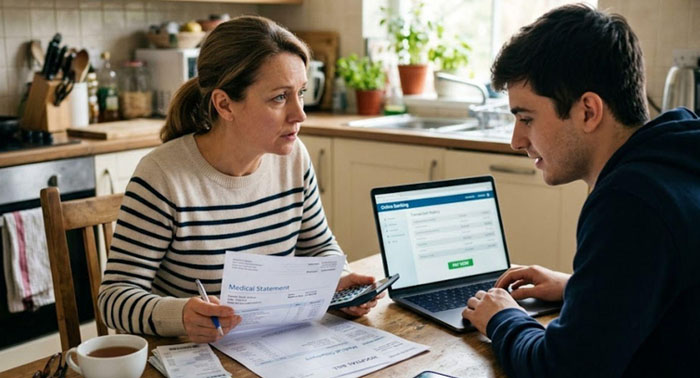
Here is a complete overview of your options, from the ones that cost nothing to the ones that deliver cash the same day.
| Option | Speed | Amount Range | Key Eligibility / Note |
|---|---|---|---|
| Negotiate with provider | 1–5 days | Varies | Works best for large bills; requires direct communication |
| Medical payment plan | Days to weeks | Full bill amount | Provider must offer; some require credit check |
| Nonprofit / charity care | Days to weeks | Full or partial bill | Income limits; documentation required |
| HSA / FSA account | Same day | Up to account balance | Must have an active HSA or FSA |
| Short-term loan (Cashback Loans) | Same day* | Up to $300 (CA) | Income + active bank account; no credit check |
| Credit card | Immediate (if available) | Up to credit limit | Requires active card with available credit |
*Returning Cashback Loans customers in good standing: instant funding 24/7. First-time applicants: minutes via debit card or 1–2 days via ACH after business-hours approval.
Option 1: Negotiate directly with the provider
This is the option most people skip and shouldn’t. Medical billing is not fixed-price retail. Providers regularly discount bills for patients who communicate early, request itemised statements, and ask about financial hardship programs. Studies have found that patients who negotiate medical bills directly with providers receive some form of reduction in the majority of cases - sometimes 20–50% or more for large balances.
The catch: negotiation takes time. If you have a week or more before the bill is due for collections, this is always worth attempting first. If the bill is already overdue or is blocking your access to further care, you need a faster solution in parallel.
What to say: "I’d like to discuss the balance on this account. I’m not in a position to pay the full amount immediately - can you tell me about your financial assistance program and whether a discount is available for patients who can settle today?"
Option 2: Medical payment plan
Most hospitals and large medical practices offer payment plans that spread the bill across 6–24 months, often at 0% interest for patients who qualify. Ask for this before paying anything. The process typically involves completing a financial assistance application, which may include income documentation.
Limitations: some providers require a credit check. Not all providers offer formal plans for smaller balances (under $200–$300). And if care is needed again before the current balance is settled, some providers restrict further treatment. A short-term loan that clears the balance can remove that barrier.
Option 3: Nonprofit and charity care programs
Most non-profit hospitals in the United States are legally required to offer charity care programs to patients below certain income thresholds. These programs can reduce or eliminate the bill entirely. Federal and state government programs - including Medicaid, CHIP, and California’s Medi-Cal - may also provide retroactive coverage for qualifying patients.
The limitation: these programs take time - typically days to weeks - and require documentation. They are worth pursuing for large bills, but they are not a same-day solution.
Option 4: Health savings account (HSA) or FSA
If you have a Health Savings Account (HSA) or Flexible Spending Account (FSA), medical bills are exactly what these accounts are designed to cover. Withdrawals for qualified medical expenses are tax-free and can be made immediately. If your account has sufficient funds, this is the lowest-cost option available.
The limitation: you must have an existing account with a sufficient balance. Not everyone has access to an HSA or FSA, and many who do have limited balances.
Option 5: Short-term loan
For California residents without an HSA, without available credit, or facing a bill that needs immediate payment, a short-term loan through Cashback Loans provides same-day cash with no credit check. The fee is $15 per $100 borrowed - flat, fixed, and disclosed before you sign. For a $300 loan: you receive $255 and repay $300 on your agreed due date. The cost is known before you commit to anything.
Option 6: Credit card
If you have an active credit card with available credit, paying a medical bill directly by card is often accepted by providers and is immediate. Credit cards are useful here if you can pay the balance within your billing cycle before significant interest accrues. For larger balances carried longer, the variable interest rate makes the total cost less predictable than a fixed-fee short-term loan.
When a Short-Term Loan Makes Sense for Medical Costs

A short-term loan is the right tool in specific circumstances. Here is a clear-eyed view of when it is and isn’t the best fit.
When it makes sense
- The bill is due or overdue and no payment plan has been arranged. Providers can send accounts to collections in as little as 30–60 days. A same-day loan that clears the balance stops the collections clock entirely.
- Care is being withheld until the balance is paid. Some providers - particularly specialists, dentists, and elective services - require payment before scheduling follow-up appointments. A same-day loan removes that barrier immediately.
- You don’t have an HSA and the credit card option isn’t available. If you have no existing credit line with available capacity and no savings account specifically earmarked for medical costs, a flat-fee short-term loan is the most accessible same-day option.
- The amount fits within the $300 California cap. For copays, prescriptions, urgent care visits, and partial balances on larger bills, $300 often covers the immediate gap.
- You have a clear repayment date. A payday loan works best when you have a known income date within the 1–31 day loan term. If your next paycheck covers the repayment, the math is straightforward.
When to consider other options first
- The bill is very large (over $1,000). A $300 California payday loan covers part of a large bill. For balances in the thousands, a payment plan negotiated directly with the provider is the more comprehensive solution.
- You have an HSA with sufficient funds. Use it. A tax-advantaged account with existing funds is always the lower-cost option.
- There is time to negotiate. If the bill arrived today and isn’t due for 30 days, negotiate first. The savings from a direct negotiation can be significant.
✓ Rule of thumb:
A short-term loan is a good fit when the bill requires payment now, the amount is within the $300 cap, and your next paycheck covers the repayment. For larger bills with more lead time, pursue negotiation and payment plans first - and use a loan to clear any remaining balance if needed.
How to Apply for a Medical Expense Loan Today
The Cashback Loans application is entirely online, takes under five minutes, and is available around the clock. No branch visit, no fax, no waiting room.
- Visit the application page. Go to cashbackloans.com/applynow - open 24/7. Applications are accepted at any hour, including evenings and weekends.
- Enter your details. Your name, California address, income source (employment, self-employment, gig work, unemployment benefits, Social Security, or retirement income are all accepted), and bank account details. No credit check is performed.
- Receive your decision. Returning Cashback Loans customers in good standing receive instant approval any time of day. First-time applicants receive a decision during business hours: Monday–Friday 5:00 AM – 10:00 PM PST, Saturday 6:00 AM – 8:00 PM PST, Sunday 8:00 AM – 8:00 PM PST.
- Review and e-sign. Your agreement shows the loan amount, the flat fee, your due date, and the total repayment before you commit. For a $300 loan: fee $45, you receive $255, you repay $300. E-sign electronically - no printing required.
- Funds deposited. Funds arrive in minutes via instant debit-card transfer (if your bank supports it) or in 1–2 days via ACH. Returning customers in good standing receive funds instantly, 24/7, through the portal or app.
For after-hours medical emergencies where funds are needed urgently outside business hours, Cashback Loans’ 24-hour payday loan service gives returning customers in good standing instant funding any time of day.
► Cover Your Medical Bill Today - Apply in Minutes →
How to Dispute a Medical Bill Before You Pay It
This section is a bonus - and it could save you hundreds of dollars before you borrow or pay anything. Medical billing errors are common. Multiple independent studies, including an investigation by the Government Accountability Office, have found significant error rates in hospital billing. The National Consumer Law Center estimates that a majority of hospital bills contain at least one error.
Step 1: Request an itemised bill immediately
You are legally entitled to an itemised bill for every medical service you receive. An itemised bill shows every individual charge - every medication, every procedure, every supply, every room charge - as a line item. The summary bill (the one you typically receive in the mail) shows only totals. Errors hide in the line items.
How to request it: Call the provider’s billing department and say: "I’d like a complete itemised statement for this account, broken down by service and charge code." They are required to provide it. Give them 5–10 business days to produce it.
Common billing errors to look for
- Duplicate charges. The same procedure, medication, or supply billed twice. This is the most common error.
- Upcoding. A less expensive procedure coded as a more expensive one. Compare what the provider told you was done against the procedure codes on the bill.
- Unbundling. Procedures that should be billed as a package are billed as separate charges to increase the total. Common in surgical billing.
- Services not rendered. Charges for consultations, tests, or supplies that you do not recall receiving. Ask for documentation if something looks unfamiliar.
- Wrong insurance information. Bills processed under the wrong plan, wrong policy number, or with the wrong coordination-of-benefits order. Even a data entry error can result in the patient being billed for the full amount.
What to do if you find an error
Write a brief formal dispute letter to the provider’s billing department. Reference the specific line items in question, state that you are disputing the charges, and request a corrected bill. Send it by certified mail or email with read receipt. Keep a copy of everything. Providers must respond to a written dispute within a defined period under the No Surprises Act and various state consumer protection laws.
You do not need to pay a disputed charge while the dispute is under review. Document that you have disputed it to protect your credit and prevent premature collections.
Important:
Do not ignore a bill while waiting for a dispute to resolve. Contact the provider, document the dispute in writing, and confirm they have noted it on your account. Bills sent to collections during an unresolved dispute can be challenged but create additional work.
If the bill is correct but you can’t pay it
If the itemised review confirms the bill is accurate and you still need to cover the balance, the options in Section 2 apply. For same-day coverage of amounts up to $300, see the Cashback Loans online cash advance - same California flat-fee structure, same no-credit-check eligibility, same same-day funding capability.
Frequently Asked Questions
Can I use a payday loan to pay a medical bill?
Yes. A payday loan from Cashback Loans is deposited directly into your bank account as cash, which can be used for any purpose - including paying a medical provider, covering a copay, or purchasing a prescription. There are no restrictions on how the funds are spent.
What if my medical bill is more than $300?
California payday loans are capped at $300 under state law. For larger bills, a short-term loan can cover part of the balance while you negotiate the remainder directly with the provider. Many providers will accept a partial payment as a good-faith gesture and schedule additional time before sending the account to collections. You can also pursue a payment plan for the remaining balance after the immediate portion is cleared.
Will a payday loan affect my credit score?
Cashback Loans does not run credit checks and does not report to credit bureaus. Borrowing, repaying, or missing a payment at Cashback Loans does not generate a bureau record. Your credit score is unaffected by the transaction through Cashback Loans.
How quickly can I get funds?
Returning Cashback Loans customers in good standing receive instant approval and instant funding 24/7 - any time of day, any day of the week. First-time applicants receive funds in minutes via debit card (if their bank supports instant transfers) after a business-hours approval decision, or in 1–2 days via ACH otherwise.
What if the bill is already in collections?
A bill already in collections can still be negotiated and paid. Collections agencies are often willing to accept less than the full balance, particularly for older accounts. If the debt has been sold to a third-party collector, you have the right under the Fair Debt Collection Practices Act (FDCPA) to request written verification of the debt before paying. Once you have verified the amount and are ready to settle, a short-term loan can fund the settlement.
Where can I get more help?
The Cashback Loans team is available to answer questions before you apply. Visit contact for phone, email, and online contact options.
The Bottom Line
A surprise medical bill is stressful, but it is solvable. The sequence that works: request an itemised bill and check for errors, explore negotiation and payment plan options with the provider, and use a same-day short-term loan to cover the immediate gap when faster resolution is needed.
For California residents who need cash today, Cashback Loans provides same-day medical expense loans with no credit check, a flat $15-per-$100 fee, and funds deposited directly to your bank account. The application takes under five minutes.
Apply now, apply now, or contact the team at contact with any questions.
Contact Cashback Loans
Phone: (909) 483-0474
Email: [email protected]
Website: www.cashbackloans.com
Contact page: www.cashbackloans.com/contact