"Trust is what they have , And great help When you call the service is great Emails get answered great The associates are great 100% best loan agency, costumer of 2 years and still" Read full review
- Roger Riggs
Financial emergencies rarely arrive at convenient times. A vehicle repair, medical expense, delayed paycheck, broken appliance, or other unexpected cost can quickly become a financial challenge when a household has little or no savings available.
How to read these findings: These statistics describe different parts of the same financial environment - preparedness, borrowing behavior, perceptions of security, and changes in everyday spending.
One of the most significant findings in the Cashback Loans Emergency Savings Survey is that 44% of Americans report having no emergency savings. For nearly half of surveyed adults, an unexpected financial setback could mean difficult decisions about how to pay for necessities, delay purchases, or find another source of funds.
44% reported having no emergency savings.
17% of respondents with emergency savings reported having less than $1,000 saved.
Many respondents indicated that building an emergency fund has become increasingly difficult because of inflation and rising living expenses.
Emergency savings can provide flexibility when an unexpected expense occurs. Common examples include vehicle repairs, medical expenses, home repairs, childcare costs, or a temporary interruption in income.
Without savings, consumers may turn to a range of resources depending on their individual circumstances, including family members, friends, credit cards, installment loans, employer paycheck advances, or other short-term financial resources.
The survey does not suggest that one solution fits every household. Instead, it highlights how limited emergency savings can reduce financial flexibility when unexpected expenses arise.


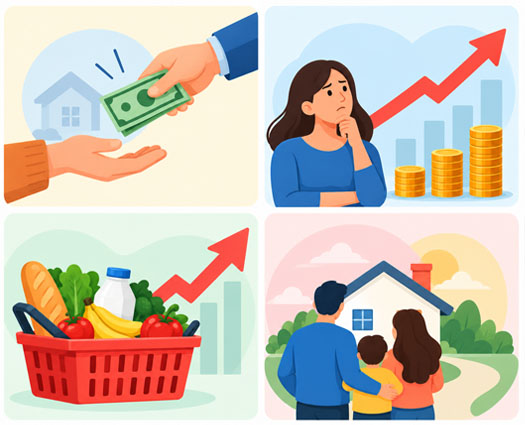
The 44% finding becomes more meaningful when viewed alongside the rest of the survey. Nearly 69% of respondents believe achieving financial security is harder today than it was five years ago, 42% report reducing grocery spending to manage their finances, and 37% borrowed money to cover essential living expenses during the past year.
Together, these findings suggest that the challenge may not simply be a lack of awareness about the importance of saving. For many households, rising costs and competing obligations may leave less room in the monthly budget for building a financial cushion.
The survey does not establish a single cause for the lack of emergency savings. It does, however, provide evidence that emergency preparedness exists within a broader household cash-flow environment.
Illustrative framework showing how limited emergency savings may affect financial flexibility. This graphic is an editorial interpretation and is not a direct survey result.
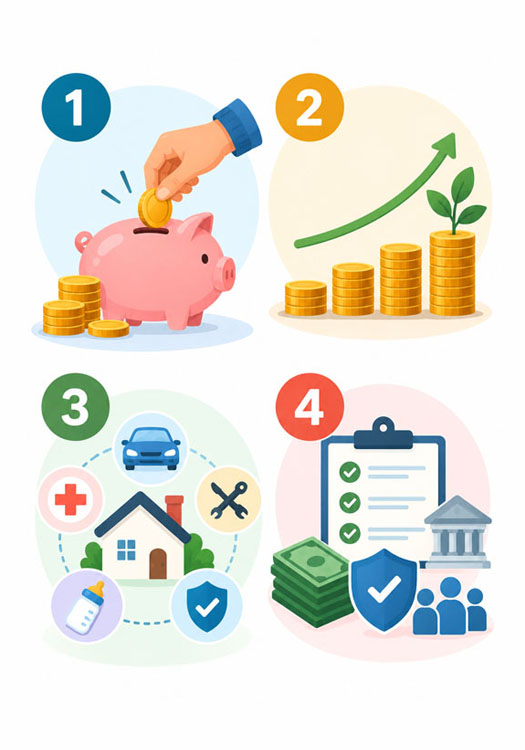
Four practical ideas highlighted in the research page.
Building an emergency fund does not always begin with thousands of dollars. Even modest savings may help with smaller unexpected expenses.
Regular contributions, even when small, can help build a savings habit. Consistent saving may provide a cushion for smaller unexpected expenses.
Think ahead about expenses such as vehicle repairs, medical costs, home maintenance, childcare, and temporary income interruptions.
Savings, insurance, employer benefits, family support, and responsible borrowing may all play different roles depending on the situation.
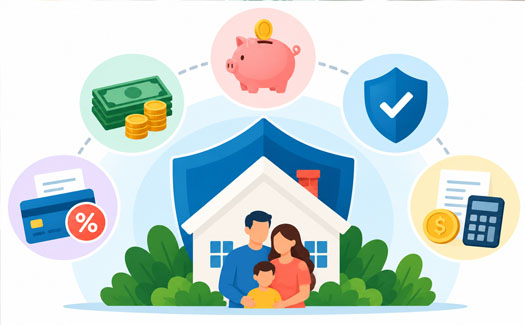
Financial resilience is broader than the size of an emergency fund. It can also involve household cash flow, insurance coverage, debt obligations, access to financial resources, and the ability to make informed decisions when an unexpected expense occurs.
The survey's findings reinforce the importance of preparing before an emergency occurs while recognizing that households have different resources, obligations, and financial circumstances.
The 2026 survey suggests that many Americans are working to balance immediate financial responsibilities with longer-term goals. Limited emergency savings, rising everyday costs, and unexpected expenses can make that balance difficult.
The central lesson is not that every household needs the same amount of savings or the same financial strategy. It is that having more financial flexibility can provide more choices when life does not go according to plan.

Learn more about your financial options.
I’d like a Payday Loan! Call Now to Apply
"Trust is what they have , And great help When you call the service is great Emails get answered great The associates are great 100% best loan agency, costumer of 2 years and still" Read full review
- Roger Riggs

Trusted California Direct Lender

Serving Californians for 20+ Years

Friendly Team to Guide You

Secure Online Application
PO Box 6090, La Quinta CA 92248.